The story behind the work
Die Geschichte hinter dem Werk
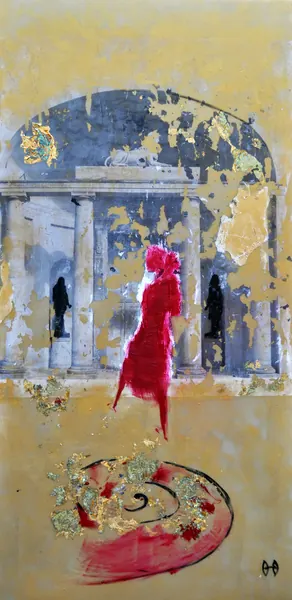
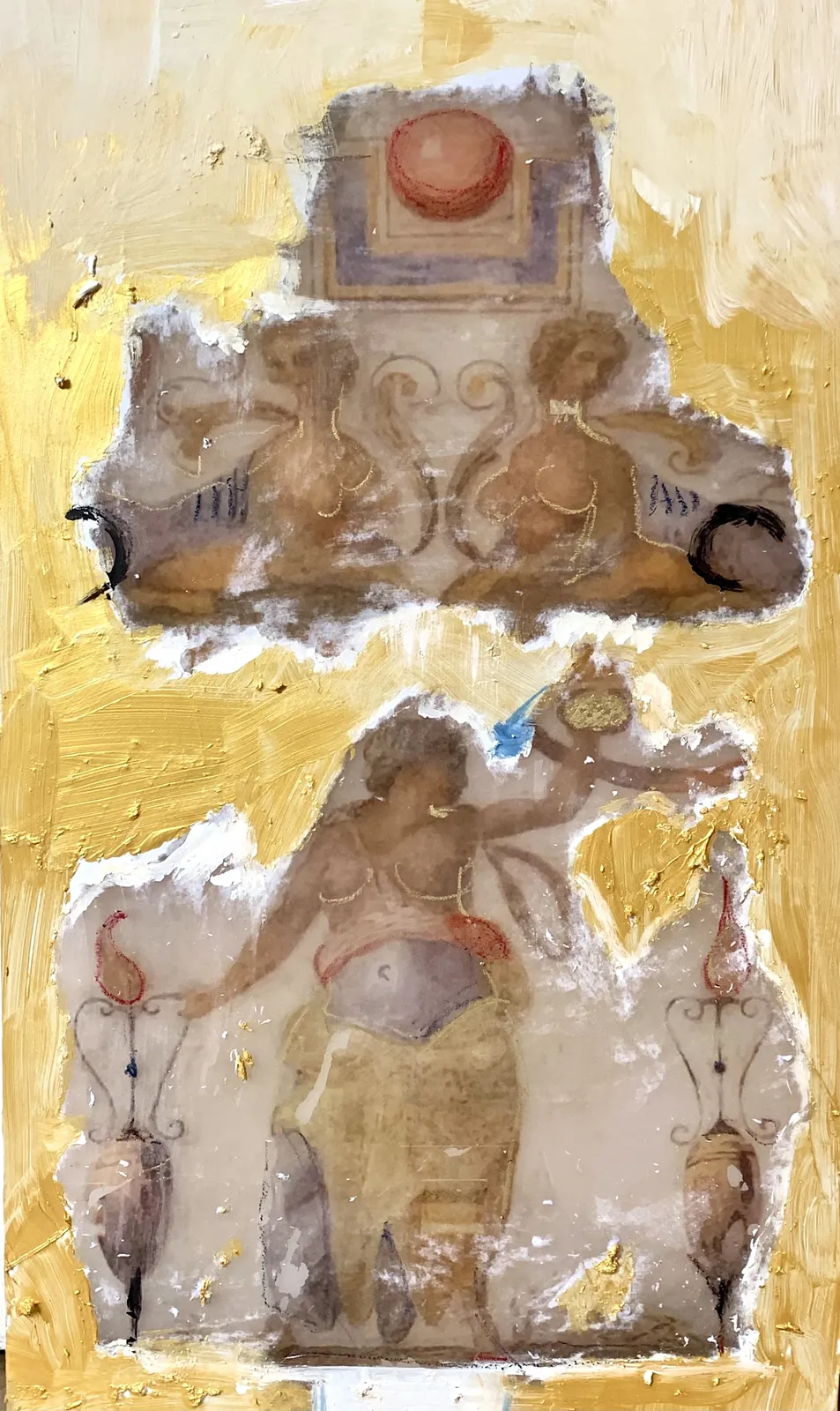
In a palazzo in Florence I photographed a historic fresco with striking pigments and gold. For Gaia I chose a narrow, vertical detail; above it, the original composition continues.
I saw in it a world axis: at the bottom a woman with fire, as if in the interior of the earth, above her a portal and a sphere that I read as an image of fertilisation and creation. I experience this sequence as an axis between earth and sky, without claiming that the historic painting had exactly this meaning. I am interested in the different cultural images for the connection of heaven and earth, without levelling out their differences.
The historic pigments remain visible in the photograph. On acrylic glass the motif gains a particular luminosity; it can be lit from behind but works equally well without lighting. A related narrow work from this period belongs to a collection in Barcelona, where it hangs between tall windows.
— Susanne Rikus
In einem Palazzo in Florenz fotografierte ich ein historisches Fresko mit eindrucksvollen Farbpigmenten und Gold. Für Gaia wählte ich einen schmalen, vertikalen Ausschnitt; oberhalb davon setzt sich die ursprüngliche Komposition fort.
Ich sah darin eine Weltensäule: unten eine Frau mit Feuer wie im Inneren der Erde, darüber ein Portal und eine Kugel, die ich als Bild für Befruchtung und Schöpfung verstehe. Ich empfinde diese Abfolge als Achse zwischen Erde und Himmel, ohne behaupten zu wollen, dass die historische Darstellung genau diese Bedeutung hatte. Mich interessieren die verschiedenen kulturellen Bilder für die Verbindung von Himmel und Erde, ohne ihre Unterschiede einzuebnen.
Die historischen Farbpigmente bleiben in der Fotografie sichtbar. Auf Acrylglas erhält das Motiv eine besondere Leuchtkraft; es kann von hinten beleuchtet werden, wirkt aber auch ohne Beleuchtung. Eine verwandte schmale Arbeit aus dieser Zeit befindet sich in einer Sammlung in Barcelona, wo sie zwischen hohen Fenstern hängt.
— Susanne Rikus