The story behind the work
Die Geschichte hinter dem Werk
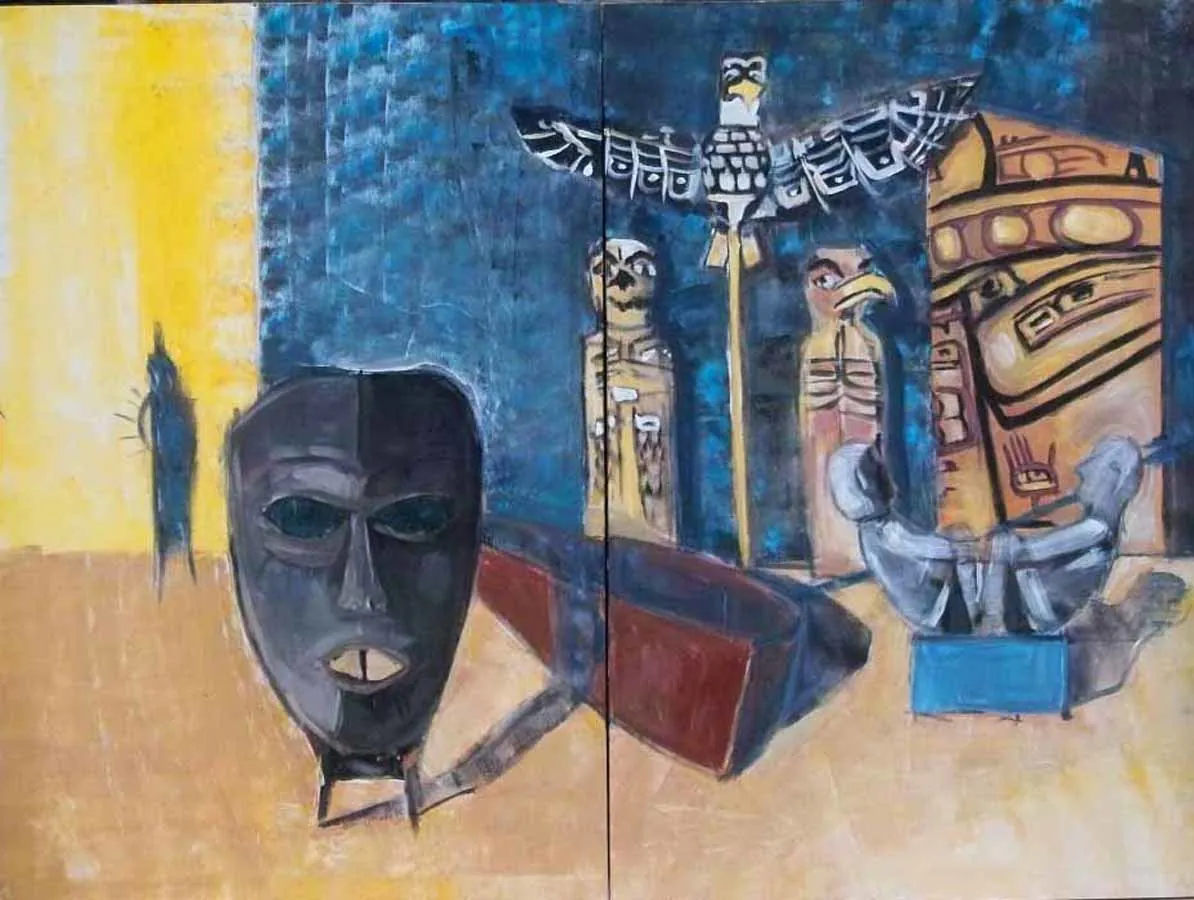
During my time as a guest student at Emily Carr University, I lived in Vancouver for a while. I visited the Museum of Anthropology and travelled again and again to places on the Northwest Coast of Canada. In workshops I met Haida artists who were carving masks and totem poles.
I travelled to Vancouver Island and, on my own, to Haida Gwaii, then called the Queen Charlotte Islands, and saw historic totem poles where they stand. These encounters held a deep spiritual meaning for me. I was moved by how art can make visible the relationships between life, death, nature and cultural memory.
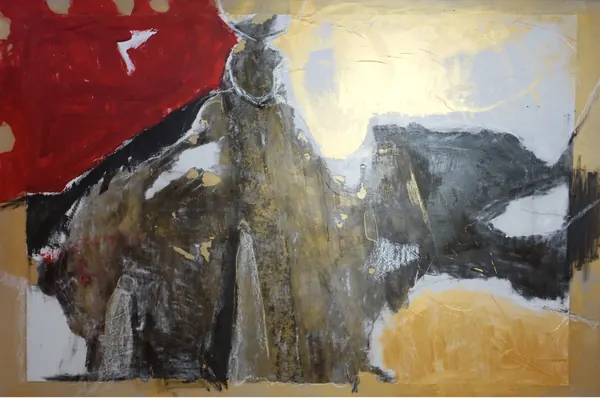
Call of the Ancient is a two-part composition born of this engagement. In 2002 I showed works from this body of work at the Dialogue of Cultures at Schloss Hämelschenburg. I was one of the few German artists there and sold several works; the owners of the castle also acquired works of mine.
— Susanne Rikus
Während meines Gaststudiums an der Emily Carr University lebte ich zeitweise in Vancouver. Ich besuchte das Museum of Anthropology und fuhr immer wieder zu Orten der kanadischen Nordwestküste. In Werkstätten begegnete ich Künstlern der Haida, die Masken und Totempfähle herstellten.
Ich reiste nach Vancouver Island und allein nach Haida Gwaii, damals Queen Charlotte Islands genannt, und sah historische Totempfähle an ihren Orten. Diese Begegnungen hatten für mich eine tiefe seelische Bedeutung. Mich bewegte, wie Kunst die Beziehungen zwischen Leben, Tod, Natur und kultureller Erinnerung sichtbar machen kann.
Call of the Ancient ist eine zweiteilige Komposition aus dieser Auseinandersetzung. Arbeiten aus diesem Themenkreis zeigte ich 2002 beim Dialog der Kulturen auf Schloss Hämelschenburg. Ich war eine der wenigen deutschen Künstlerinnen dort und verkaufte mehrere Werke; auch die Eigentümer des Schlosses erwarben Arbeiten von mir.
— Susanne Rikus